

TRIGGER WARNING: contains details of murder, legal system.
We should always remember the victims and their families when we talk about true crime. It’s easy to focus on the killer, or the perpetrator, trying to understand how anybody could do such things. Even so, what is sometimes more astounding is the courage and strength showed by the families of the victims. For Part 1 of these stories I want to highlight the case of the murder of Julie Hogg, and her mother’s subsequent battle against the legal system.

Julie Hogg was 22, herself a single mother of a young son. She lived in Billingham, Stockton-on-Tees, UK. The family was close, she would see her parents everyday. Julie’s marriage to her son’s father had recently ended. Julie had a job delivering pizzas, and she would leave her son with her loving parents when she went to work.
Her son was with her parents one night in November 1989. The next morning, Julie’s mum, Ann Ming called Julie on her phone to wake her at 7.30. She couldn’t get through to her daughter, and began to worry. Ann drove to Julie’s house, which was locked and the curtains were drawn. There was still no answer. She asked Julie’s brother to break into the house, and he was suspicious of how tidy the house was, as the family knew Julie was quite messy. As a single mother of a three year old son, that is understandable.
Julie was reported missing, and her house was searched, but even after 5 days, they could find no clue to help the investigation. Ann Ming did not believe Julie had gone somewhere of her own accord, because she would not have left without her make up.
Julie’s son was due to move back into the house, this time with his dad, whom Julie had married. A smell was noticed coming from the bathroom. Ann, Julie’s mother, ripped off the panel below the bath, and found Julie. The forensic search apparently had not taken that step. Julie’s three-year-old son was in the house at the time of the discovery. At the post-mortem, it was discovered that she had suffered a sexual assault, but there was no clear cause of death, as her body was discovered three months after her death. The sexual assault had left some DNA from the perpetrator. This DNA belonged to Billy Dunlop. When his home was searched, they found Julie’s keys hidden, with his fingerprints on them.

At the trial, the defence spoke about her ‘promiscuity’ and tried to cast doubt on the evidence by talking about Julie having multiple sexual partners. It was also in many news articles, implying that she deserved her death because she had ‘no morals’ or that she in some way brought it on herself. It is absurd and abhorrent to be blaming a murder victim for her murder based on who she is rumoured to have been sleeping with.
The defence also suggested the keys had been planted in Dunlop’s house by the police. Of course, another absurd accusation made to cast doubt on the evidence. Juries in the UK must come to a guilty verdict only if they are sure ‘beyond reasonable doubt’ that the perpetrator is guilty. The jury could not in fact come to a unanimous verdict, or even a majority verdict. The judge discharged the jury and ordered a retrial.
Again, outrageous suggestions were made at the trial, for example that she had died as the result of an accident during a sexual activity. Even if this were the case, it doesn’t explain how she came to be found under the bath, and why he hadn’t sought medical help at the time of the incident.
Billy Dunlop was acquitted of the murder of Julie Hogg, to the outrage and bewilderment of her family and the police.
Later, it was heard around the town that Billy had been bragging, talking about having killed Julie and got away with it. Unfortunately, having already been acquitted, he could not be retried for the same offence because of an old law. The law of double jeopardy. This law was created to protect powerless civilians from being repeatedly prosecuted for the same crimes, when the state was all powerful. Now the law was going to protect the guilty.
The case of Stephen Lawrence will help to change this law. He was murdered a group racist white men. They stabbed him at a bus stop in London, UK, seemingly just for being black, though the five who were arrested were not charged. The Lawrence family brought a private prosecution, which acquitted the men of the charges. A police officer and president of the SuperIntendent Association, named Brian McKenzie was troubled by this double jeopardy law, and made a speech at the SIA conference, which was attended by the Home Secretary Jack Straw. The Home Secretary is responsible for law enforcement above the police and judiciary.
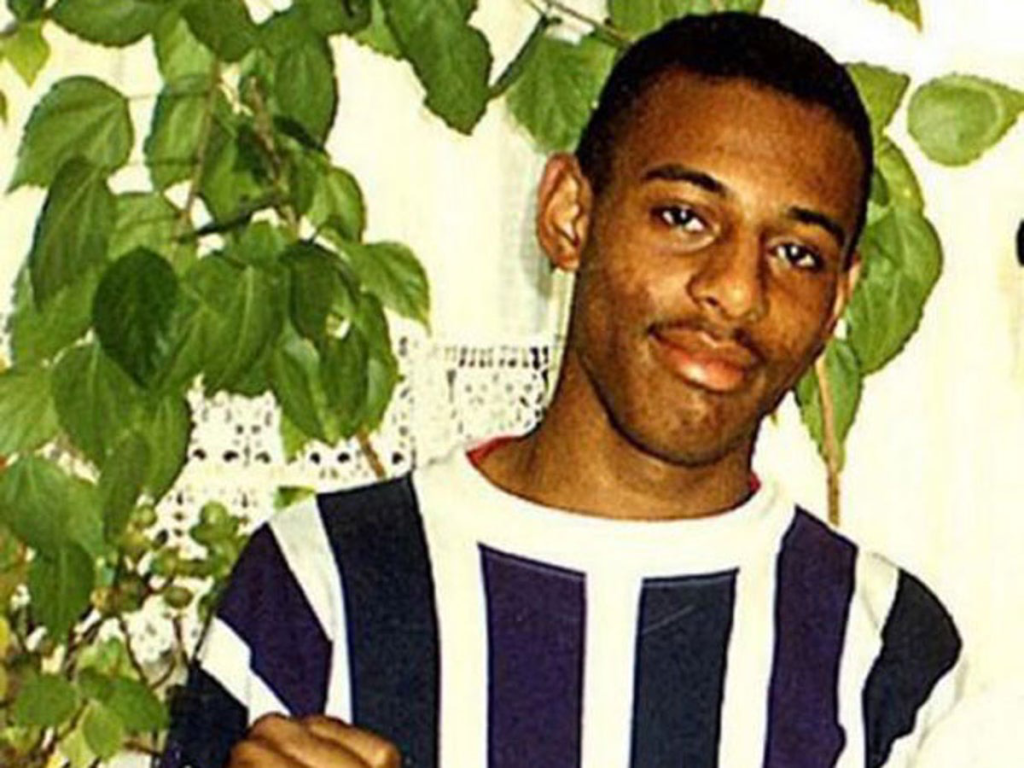
The MacPherson Inquiry into the failure to convict perpetrators for the killing of Stephen Lawrence, came to the conclusion that the prosecution of this crime was affected by institutional racism, and made a further recommendation that the double jeopardy law should be changed for murder cases in which new and compelling evidence has come to light after the conclusion of the trial. After the MacPherson Inquiry, the Home Secretary went to the Law Commission to request that all changes in the recommendations from the inquiry were instated. This included changes based on the findings of institutionalised racism in the justice system, and that of the law on double jeopardy. The Law Commission is an independent organisation which reviews and reforms the laws of England and Wales.
Julie Hogg’ s killer, Billy Dunlop, was convicted of two attempted murders after Julie, an ex-partner of Dunlop’s and her new partner. In prison, he confessed to a prison guard that he had killed Julie Hogg. He still could not be retried for her murder, as the double jeopardy law had still not been reformed yet. Instead he was tried for perjury – lying under oath in court. For this, he received 6 years in prison. Ann Ming heard this man confess to killing her daughter, and told the court details of the death he had caused, and then after everything she and her family had been through to get justice for her daughter, she was understandably upset at the sentence he received. This is where Ann’s campaign to overturn the double jeopardy law begins.
She first went to see her local MP, within a few days of the perjury sentencing for Billy Dunlop. The MP Frank Cook agreed to take Ann’s letter directly to the Home Secretary. Within days, Ann Ming and her husband meet Jack Straw in London to try and convince him to change the law on double jeopardy, and not only that but to apply the changes retrospectively. In the UK law reforms are usually only applied to cases after the reform has been processed, not past cases. He told Ann that the next step would be for the case to be presented to the Law Commission for their review and reform procedure. So of course, Ann Ming went to the Law Commission herself as well. This was a woman, a mother, absolutely dedicated to finding justice for her daughter. By this time, the police officer mentioned earlier – Brian McKenzie was now advising the Home Secretary, and argued to him that the reform on double jeopardy should be made retrospective.
It wasn’t until 2002, that the new Home Secretary, David Blunkett, declared a change in the making. A ‘white paper’ was issued which details the proposed law reforms, which then has to be passed by the House of Lords, before being entered into UK law. Ann Ming was personally promised her own copy of this white paper, and on collecting it from the Home Office, she discovered that it included the recommendation to have the law act retrospectively. This was a huge achievement, that had so far taken her 13 years, and now all that was left was for it to be agreed by the House of Lords. She carried on her inspirational campaign of strength.
Ann Ming went to a conference for victims and families, and it just so happened that in the cafeteria at lunchtime, she spotted Lord Falconer, Solicitor General, sitting alone. She took her chance and approached him, retelling her case to him. He agreed with her views and arranged for her to present her case to the House of Lords. This must have been daunting, trying to convince them to reform the law and apply it retrospectively. This was Ann’s last big push, to get the law changed for her daughter and give her the possibility of a retrial for Billy Dunlop. Fortunately, a bill was announced by the Queen, which stated a retrial could occur if there was new evidence, and a Court of Appeal agreed that the evidence is compelling and may change a jury’s view on the guilt of the suspect. This still protected innocent suspects from multiple unnecessary prosecutions, while allowing a second trial in cases that warranted it, such as Julie’s.
Billy Dunlop confessed in court to Julie’s murder, and was the first person convicted after the reform of the double jeopardy law. Ann’s campaign had paid off. After 17 years, at last, she had got justice for Julie, after all her hard work. Later, Dobson and Norris, two of the five men arrested for the murder of Stephen Lawrence, were convicted of the racially aggravated murder. Many other cases have also been brought since the change to the law. See Mario Celaire, Mark Weston, Wendell Baker, Russel Bishop, Michael Weir, Irvine Watt and Surjit Chhokar in Scotland.
References:
 Natural Causes